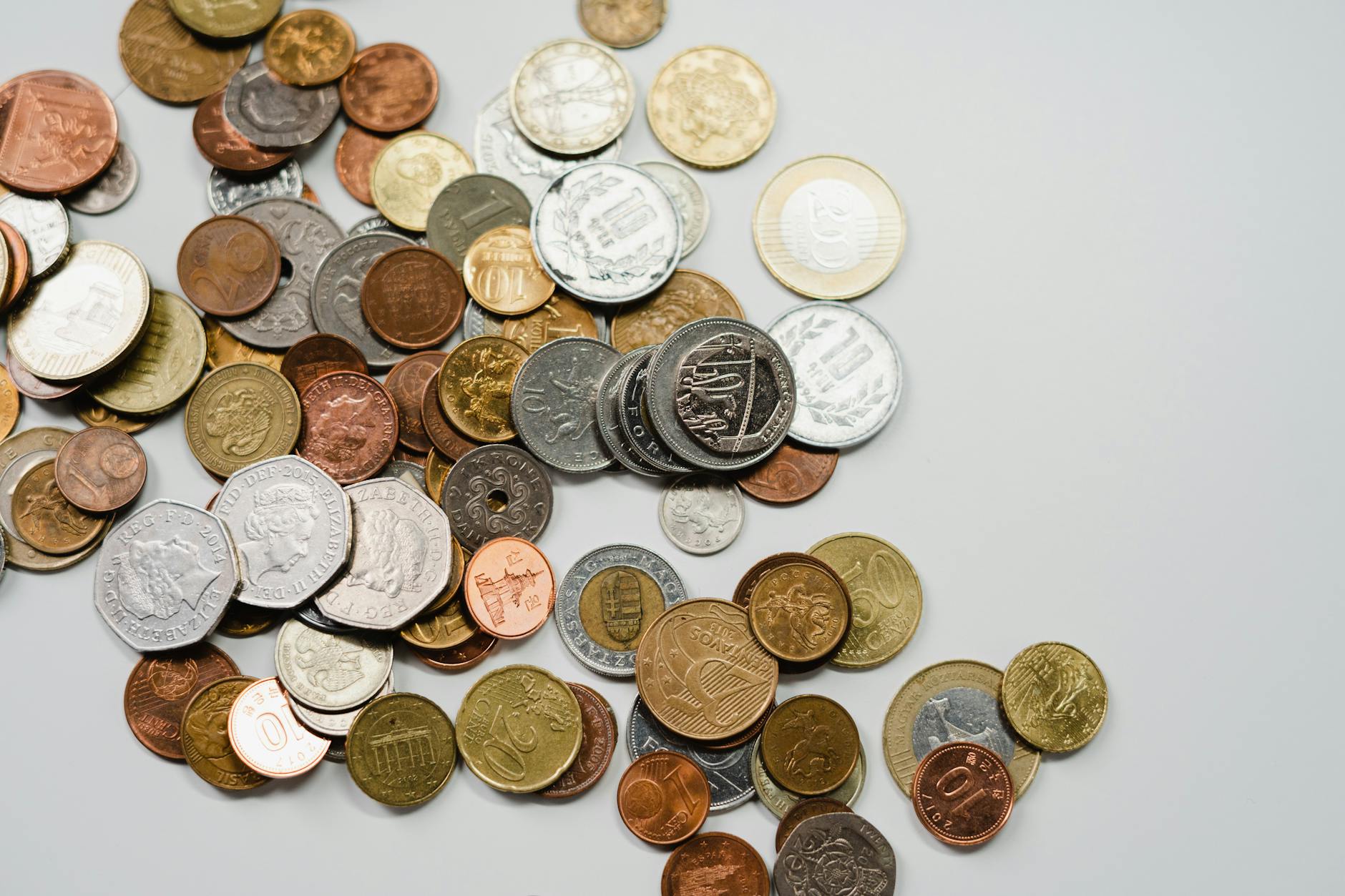

Old quarter dollar coins can be worth more than their face value of 25 cents, especially those minted before 1965.
Here’s why and what affects their value:
- Pre-1965 Washington Quarters: Quarters minted between 1932 and 1964 are made of 90% silver.
- Current Value: These silver quarters are generally worth at least their melt value (the value of the silver they contain), which can fluctuate based on the market price of silver.
- Post-1965 Quarters: Quarters minted after 1964 are made of a copper-nickel clad composition and are generally only worth their face value, [according to the U.S. Mint].
- Key Dates and Low Mintages: Certain years and mintmarks are rarer and more valuable due to lower production numbers. For example, the 1932-D and 1932-S Washington quarters are considered key dates and command higher prices.
- Older Quarter Types: Older quarter designs, like the Draped Bust (1796) and Capped Bust (1815) quarters, are often more valuable due to their age and historical significance.
- Error Varieties: Quarters with minting errors, such as doubled dies or off-center strikes, can be highly collectible and valuable . Examples include the 2004-D Wisconsin “Extra Leaf” variety and the [2005-P Minnesota doubled die quarters].
- Grading Scale: Coins are graded on a scale (like the Sheldon scale) based on their condition, with higher grades (e.g., Mint State) indicating less wear and tear and resulting in higher values.
- Factors Affecting Grade: Factors like scratches, dents, luster, and overall eye appeal contribute to a coin’s grade and, therefore, its value.
In summary, the value of an old quarter dollar coin is influenced by its age, metal content, rarity, historical significance, and condition. If you have an old quarter, especially one minted before 1965, it’s worth checking for its potential value. You can research key dates and varieties, consult coin price guides, or seek a professional appraisal to determine its worth.