
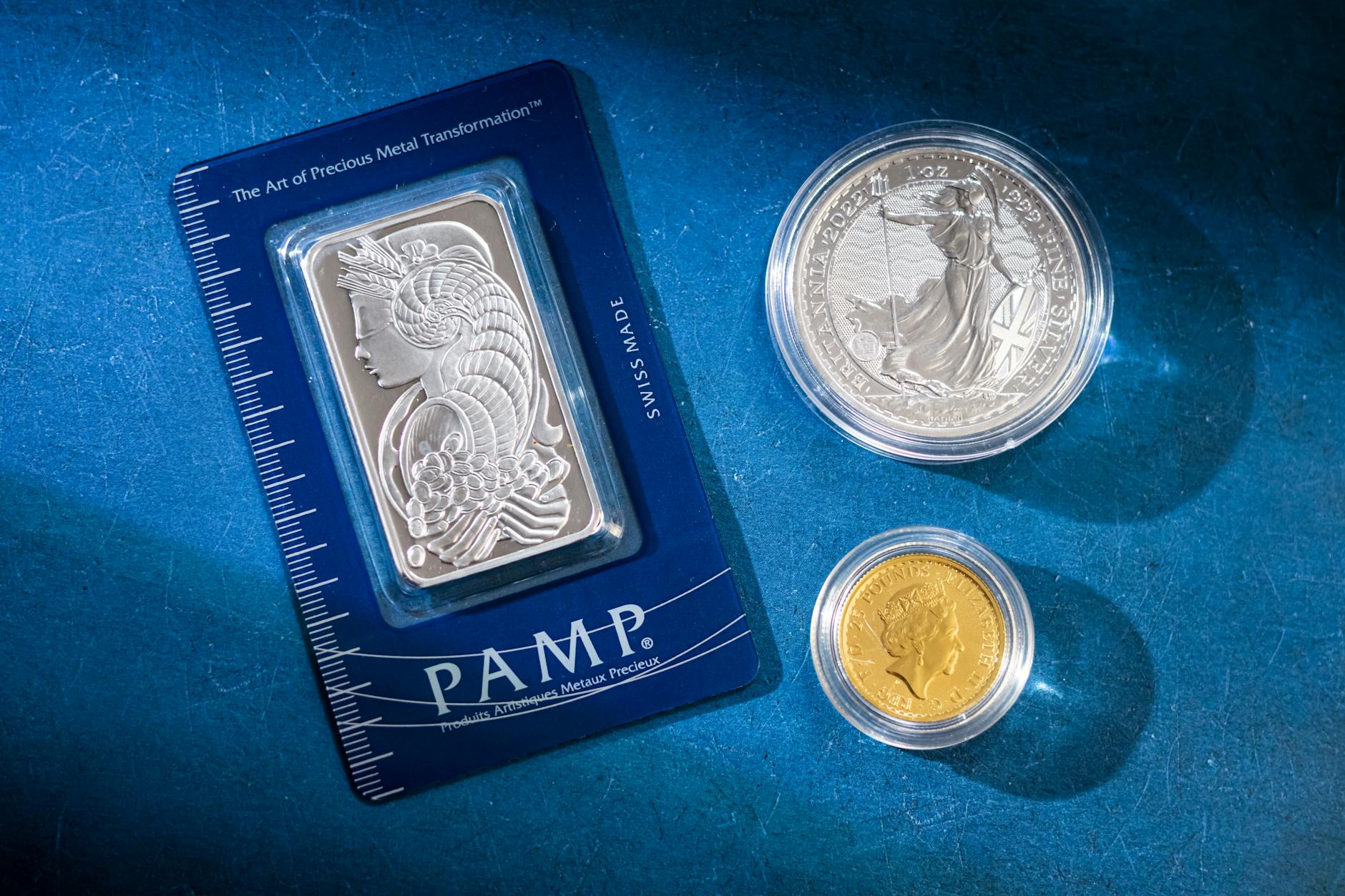

To “mint a coin” means to manufacture a coin in an official facility called a mint.
This process involves several key steps:
- Creating Blanks: Starting with large strips of metal, blank discs are punched out.
- Preparing Blanks: These blanks are then heated (annealed), washed, and dried to make them more pliable and enhance the final coin’s appearance.
- Creating a Rim: The blanks undergo an “upsetting” process to create a raised rim, which protects the coin’s design and allows it to be stacked.
- Striking the Design: The blanks (now called planchets) are fed into a coining press where dies (metal tools containing the inverse image of the coin’s design) are pressed onto both sides, imprinting the design.
- Quality Control and Distribution: Minted coins are inspected for errors, counted, bagged, and then distributed.
Minting is essential for a country’s economy because:




- It produces the nation’s currency: Mints are responsible for ensuring that a country has a reliable and consistent supply of coins for trade and commerce.
- It ensures quality and security: Mints adhere to strict quality standards and specifications, and modern minting incorporates security features to prevent counterfeiting.
Most coins have a small letter or symbol, known as a mint mark , that indicates which mint produced it. These marks can be important for collectors, as they can affect a coin’s rarity and value. For example, coins from mints with lower production numbers, like the Carson City Mint (CC) or San Francisco Mint (S) in the US, are often rarer and more valuable.
The United States has several active mints, each with its own mint mark:
- Philadelphia (P): The oldest and largest US mint, [producing most of the circulating coins].
- Denver (D): Focuses on circulating coins and coin dies.
- San Francisco (S): Specializes in producing collectible and proof coins.
- West Point (W): Primarily produces bullion and commemorative coins.
In essence, “minting a coin” is the complete process of transforming raw metal into finished coins ready for circulation, playing a vital role in a nation’s economy and history.





What is the meaning of mint coin?
Money minting refers to the process of producing coins. A mint refers to a manufacturing facility that produces coins that are used as a nation’s currency. National currencies are generally minted by a country’s central bank or through an independent mint with authorization from the central bank.
What is considered a mint coin?
I can help with that. A Mint State coin will show no signs of wear from circulation, maintaining its luster and design details These coins are graded on the Sheldon Scale, which ranges from 1 to 70, with the highest grades being between Mint State 60 and Mint State 70.
Why is it called a coin mint?
Good point! The origin of the word “mint” is ascribed to the manufacture of silver coin at the Temple of Juno Moneta in 269 BCE Rome. The goddess Moneta became the personification of money, and her name was applied both to money and to its place of manufacture.